

If your website takes forever to load and has super-long dropdown menus, your website could do with a user experience (UX) optimization boost. When potential customers have to click all over the site before arriving out of breath and frustrated at the page they wanted, it indicates that the site’s SEO UX is sorely lacking. Poor website UX hinders overall SEO performance, ultimately hurting conversions and user engagement.
UX SEO: These are just a few letters, but they mean the world to your business goal and your return on investment. If your site is slow, does not load properly on a user’s device, or has tiny call-to-action buttons, your users will probably abandon it before they convert and fulfill your business goals.
What is a website user experience?
User experience refers to how users feel when they use a website. It can be rated as a high-quality or low-quality experience. Each website user experience (UX) begins when the user clicks on a web page and ends when they leave it. The user immediately notices how the site loads and its design. In as little as 0.05 seconds, users form an opinion about your website and assess how they expect the user experience to be.
A user wants to buy something or find information – in as few clicks as possible. They want to learn about something – in a font that is as readable as possible, with images and videos. They may wish to access an online tool – with navigation to find that tool as simple and obvious as possible. They immediately decide whether it is worthwhile to continue their web page experience on that page. If there is a poor user experience, most users abandon the site.

What is UX optimization?
UX optimization refers to optimizing the user’s experience on a website. This is done by refining key performance indicators and improving website function. UX optimization results in better
- Usability – reduce confusion, increase meeting user goals,
- Accessibility – increase equal access for all users, and,
- User satisfaction – enhance user enjoyment of the website
What is UX SEO?
UX SEO stands for “user experience search engine optimization.” It refers to performing user experience (UX) improvements together with search engine optimization (SEO). Overall, UX and SEO affect how a user arrives at your web page and how the web page performs for the user.
UX and SEO directly affect how you achieve your business goals through your website.
How does UX optimization affect user experience?
Positive user experiences are more likely to result in conversions, better return on investment (ROI), and rising search engine rankings. A negative user experience will result in a diversion, with the user abandoning your site and taking their business elsewhere. UX affects the site’s credibility, too. According to Zendesk, 54% of users share their negative user journey with at least 5 people. UX optimization makes or breaks the user experience.
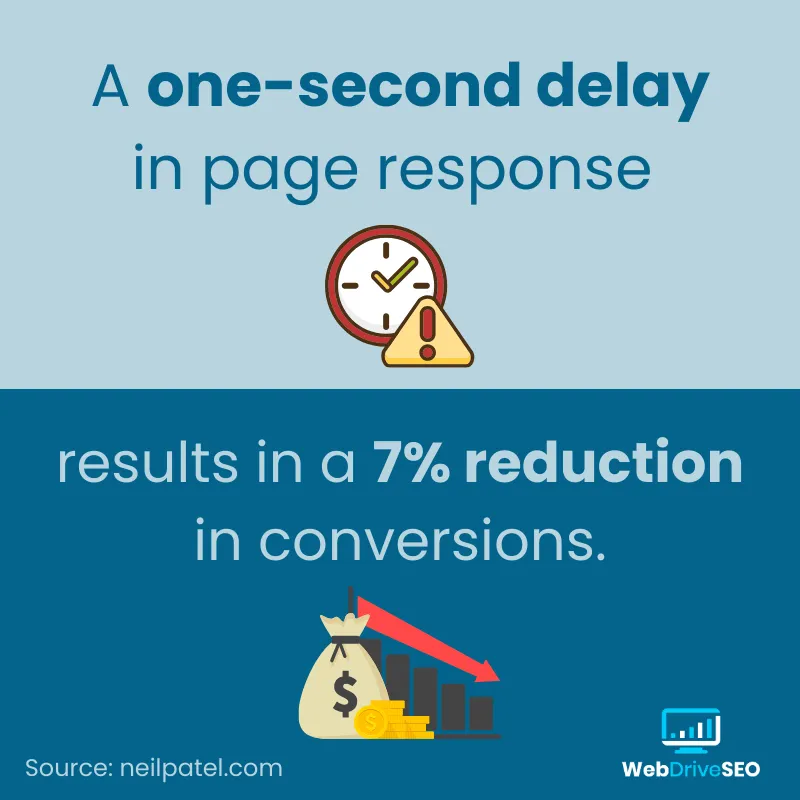
Website UX design influences page experience
Website UX design influences user page experience with:
- How the page loads – includes loading speed and loading in a functional manner
- Accessibility – size and color of text, audible options for text content
- Size and functionality of CTAs – thoughtful spacing of CTAs
- Placement of essential information – once or more times on the page, above the fold, designed to stand out
- Ease of navigation between pages – what is included on the page and when the user will need to navigate to another page
- User control on the site – e.g., autoplay and sound controls
UX designers use the 7 pillars of UX website design to improve user experience. Make sure your website is:
- Findable
- Desirable
- Accessible
- Credible
- Usable
- Useful
- Valuable
By taking the 7 pillars into account, you can improve your website function and user experience to achieve optimal UX.

Why is UX optimization essential for improving SEO?
UX optimization positively impacts SEO when it causes higher engagement, reduces the bounce rate, and improves CTR (click-through rate). For example, through improving UX, users enjoy a better navigation experience. Additionally, with a clear, organized URL hierarchy, search engine crawlers will be able to crawl the website more effectively, thereby improving SEO rankings.
The best option for designing or updating a website is accommodating as many UX design best practices as possible. Consulting a UX SEO designer is important since SEO and UX best practices sometimes seem to clash.
2 examples of this are:
- keeping a balance between readability and keyword density, and
- considering fast page loading above large design elements.
Applying mobile UX best practices for mobile SEO and UX is increasingly important since more and more search queries are coming from mobile users.

5 ways to optimize UX on your website
Several UX improvements and SEO factors work together for optimal website performance and use.
1. Decrease loading time
Optimize page speed using various plugins and apps, lazyloading for images, and caching. Part of speedy loading is mobile friendliness – where mobiles and devices with small screens load smaller images faster. You can perform a website speed test at Pingdom.
2. Use visuals effectively
Encourage interaction with relevant SEO-optimized visuals such as:
- high-quality images
- interesting videos
- interactive visual elements (such as user feedback; user interface areas; touch and hold for more info)
3. Create engaging content
Make sure your content fulfills the 7 pillars of UX design. Make your content desirable, credible, and useful. Many B2B users make initial contact with a potential provider after seeing their blog.
Ensure each blog post is well written, with acceptable spelling, punctuation, and varied sentence length. Use shorter paragraphs with succinct points and original, interesting content.

4. Make site search helpful
Make your site search box visible. Allow auto-complete and offer helpful alternatives should there be no exact match. Take account of user spelling errors. Offer related content in a side panel so users do not need to look far to learn more, enjoying a seamless search experience.
5. Usability testing: User research
After implementing any UX improvements, test UX changes using Core Web Vitals and identify UX issues that could cause a blip in the user journey.
Through usability tests, the usability specialist analyzes how users interact with your user interface. The website analysis notes any areas where improvements can be made to optimize UX.
UX design website development is far-reaching and can bring measurable improvements; it is also one of the best ways to improve your site’s rankings and customer experience.

Google inspired: User experience optimization and satisfaction
SEO and UX design are essential for Google’s end goal, user satisfaction for your target audience.
User experience optimization improves user satisfaction and reduces the bounce rate. When search engines see that users stay on your site longer it is asing that it fulfills user needs. This builds your website’s trust and authority.
With user satisfaction, you could grow your audience and sales more than you thought possible.
A Texas study found that many highly satisfied users are willing to pay more for a product than unsatisfied customers. Take advantage of that while improving user satisfaction.
How can you measure UX SEO?
Which UX and SEO metrics should you track to measure the success of your website?
- In Google Analytics, measure time spent on the site and see which pages your customers like to spend time on and where users drop off.
- Measure completion rates and latency in Google Analytics with the custom funnel. You can see the completion rate and time elapsed for each funnel stage. These technical elements indicate the time taken to complete the objective from the beginning of the user journey to the end.
- Conversion rate is a good way to measure whether your site is successful. Conversion rate optimization is another excellent way to boost your UX and SEO metrics.
- Ask for user feedback unobtrusively and not too frequently.
- Calculate revenue per user (RPU) and average order value (AOV) for online stores based on products purchased or deals signed.
- Engagement rate, error rate, or cart abandonment are all measures of user dissatisfaction.
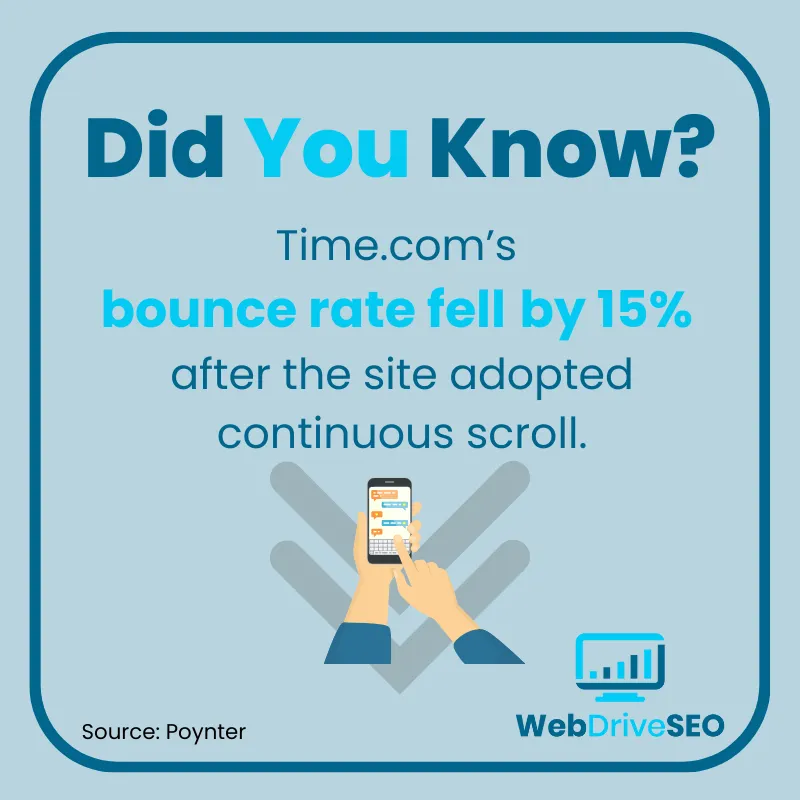
How WebDriveSEO helps business owners optimize their websites for the best UX SEO potential
WebDriveSEO is a thriving SEO agency specializing in helping website owners optimize user experience while systematically boosting organic SEO.
WebDriveSEO applies UX optimization to give your users an excellent website experience. The amazing double-barreled approach by WebDriveSEO brings tremendous growth for online presence and an improvement in conversion rate.
Contact WebDriveSEO, the experts in SEO, for your FREE discovery call!


